Which mobile survival game still holds up after the first week?
Four titles, played on ordinary phones and ordinary Australian data plans. Not a leaderboard — a record of what each game asks of you and where it starts to drag.
This is a personal notebook kept by Lachlan Smith in Victoria. It covers a narrow slice of mobile gaming: survival and open-world sandbox titles, the kind you can play in a caravan park with one bar of reception. Every game here has been installed on a phone, played past the tutorial, and returned to a week later — because a survival game that is fun for twenty minutes and unbearable on day six is a different product from one that keeps its shape.
Nothing on this site is sponsored, and there are no affiliate links. Where you see a store button, it goes to the game's own Google Play listing and nowhere else. Prices, age ratings and in-app purchase details live on that listing, change often, and are deliberately not copied here.
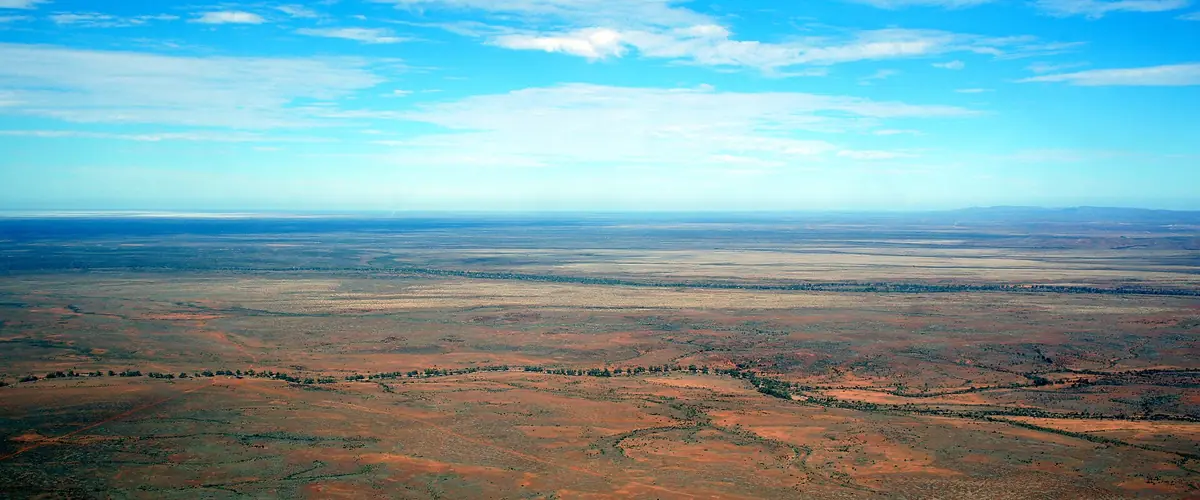
Strzelecki Desert, South Australia. Photo: Joy Engelman, CC BY-SA 3.0, via Wikimedia Commons.
§ 2
The four games
Two of these are survival games in the strict sense — hunger, thirst, cold, a body that fails you. Two are sandboxes that happen to start you with nothing. They are grouped together because they answer the same question in different tempos: what do you do with an empty map and no instructions?
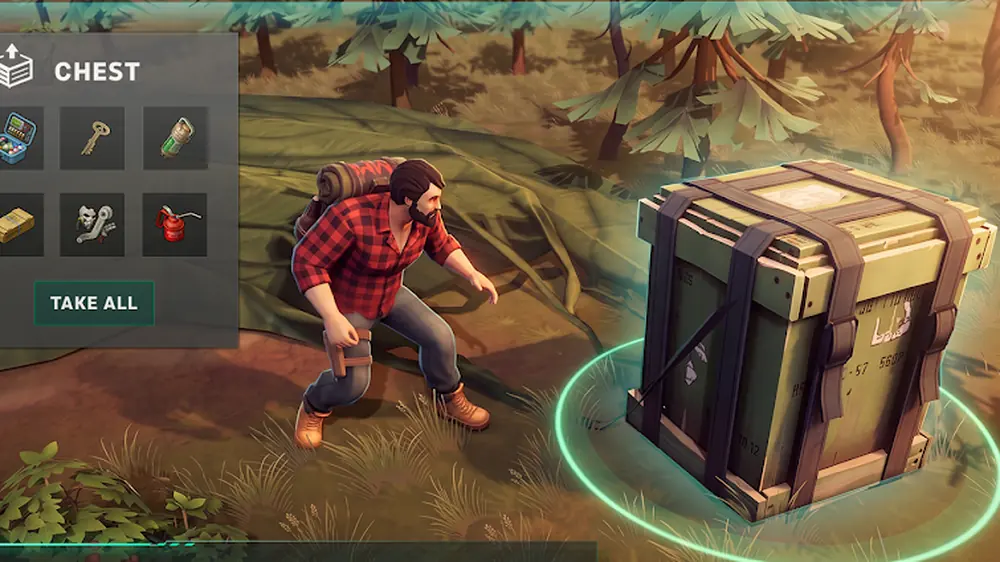
Last Day on Earth: Survival
Our score 4.0 / 5
The most demanding of the four, and the most likely to be abandoned in week two. Loot runs are timed, your base decays while you are away, and the good gear sits behind zones that punish a half-charged phone. Played in short bursts it is tense and readable; played as a second job it turns into a chore of raid timers.
What keeps it here is the craft loop. The build menu is genuinely satisfying, walls and floors matter, and the moment you first fence a base properly is the moment the game clicks. Treat it as a slow project rather than a daily obligation and it holds up well past the first month.
Terms, taxes and fees are shown at the next step on the store page.
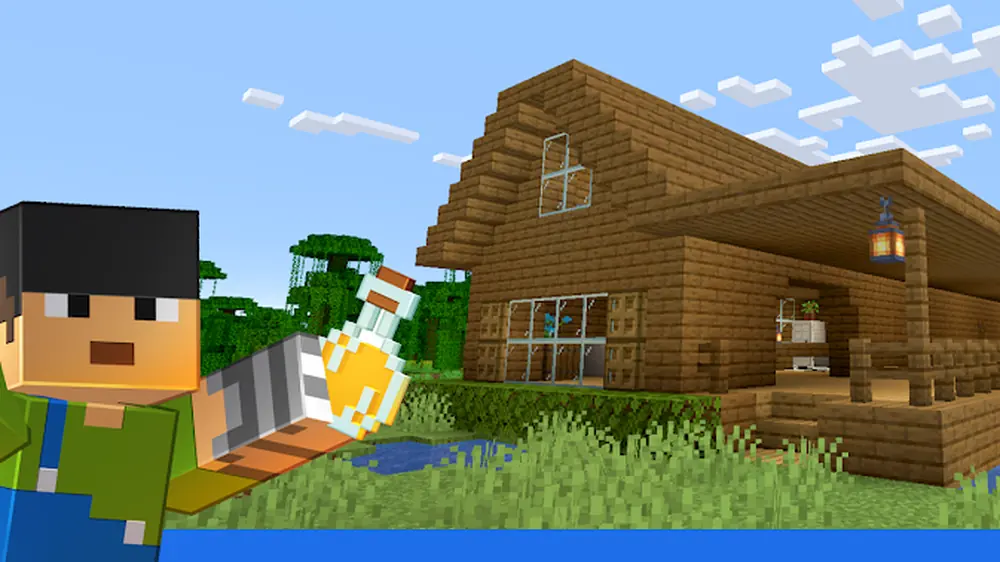
Minecraft
Our score 4.6 / 5
The reference point everyone else is measured against, and on a phone it still behaves. Survival mode on a fresh seed gives you the cleanest version of the loop in this whole list: chop, dig, build a door before dark, and discover on night three that your first house was in a stupid place.
The touch controls are the honest weak spot. Fine for building and mining, awkward the moment combat gets crowded, better with a controller if you own one. Worth knowing that the world you make on the phone is yours locally — this is the one game here that never needs a connection to be worth opening.
This is a paid title. The current price for your account is shown on the store page.
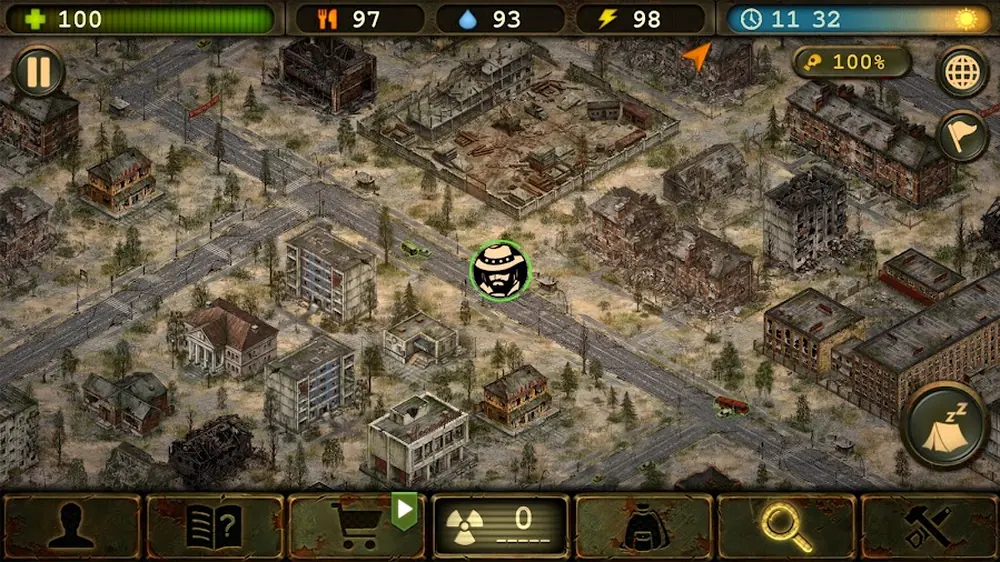
Day R Survival
Our score 4.3 / 5
A post-apocalyptic road trip across a ruined map, played almost entirely through menus and a status bar. Hunger, thirst, radiation and fatigue all tick at once, and the first ten deaths teach more than the tutorial does. It reads as dry until you notice you have been planning a two-hour walk to a pharmacy.
It is the best of the four for a bad connection — a stop-start commute suits it, and nothing is lost by closing the app mid-journey. The pixel art hides a deep crafting tree, and the writing has a bleak sense of humour that the genre usually skips.
Terms, taxes and fees are shown at the next step on the store page.
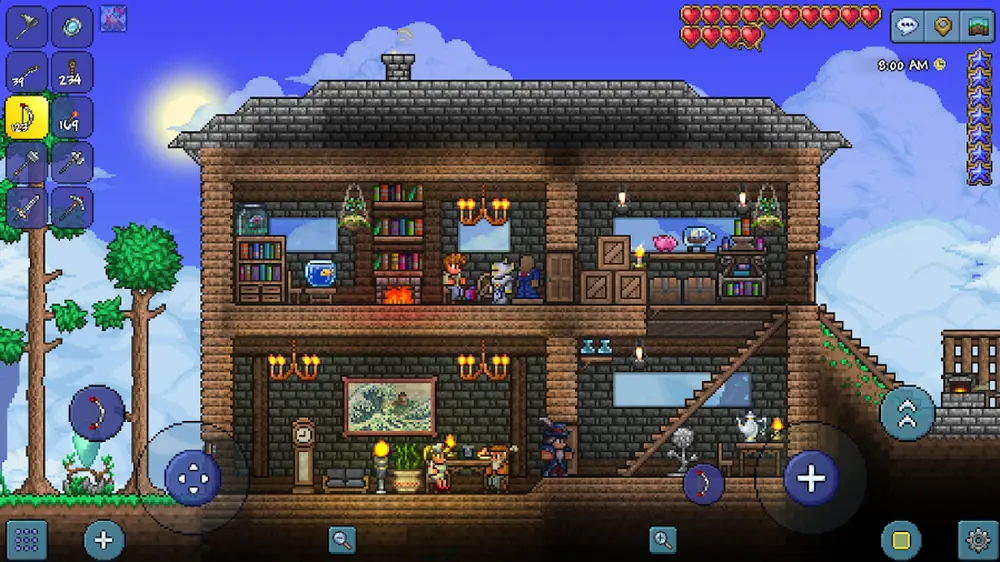
Terraria
Our score 4.5 / 5
Sideways Minecraft with a boss list. The opening hour is the weakest part — a lot of wood, a lot of dirt — and then the world opens into caves, biomes and fights that ask for actual preparation. The mobile version is a full port rather than a trimmed-down cousin, which is rarer than it sounds.
Two warnings. The interface is dense on a small screen and worth ten minutes of setup in the options. And progression assumes you enjoy reading a wiki; if that sounds like homework rather than fun, start with Minecraft instead.
This is a paid title. The current price for your account is shown on the store page.
§ 3
Side by side
The same four games, arranged by what they want from you rather than by score. Read the last column first if you are choosing one tonight.
Four survival and sandbox titles compared — our reading, not store data
Game
Shape of play
Session
Pressure
Pick it if
Last Day on Earth
Loot runs and base defence
15–25 min
High — timers run while you are away
You like planning before you play
Minecraft
Open sandbox, build anything
20 min to hours
Low — you set the stakes
You want to make things, not lose them
Day R Survival
Travel, scavenge, treat injuries
10–20 min
Medium — slow decisions, hard consequences
Your reception drops out often
Terraria
Explore, craft, fight bosses
30–60 min
Medium — spikes at each boss
You want a game with an ending in sight
Session lengths are how long a useful stretch of play took us, not a rule. Store details — price, age rating, in-app purchases — belong on each game's Google Play page and are checked there.
§ 4
How we judge
The score at the top of each review is one number pulled from five readings. It is an opinion, formed on mid-range Android hardware, and it is worth exactly as much as any other reader's opinion — the point of publishing the criteria is that you can disagree with a specific one.
Day six. Is there a reason to open the game after the novelty has gone?
Hands. Do the touch controls fight you when the screen gets busy?
Interruption. What happens if the phone rings, the train arrives, or reception drops?
Honesty of progress. Does effort move you forward, or does waiting?
Battery and heat. An hour of play on a phone that also has to last the day.
We do not score graphics separately. A game that runs smoothly at a modest resolution beats a prettier one that stutters, and on a phone that is a design decision rather than a technical one.
No. No game on this site has been sponsored, gifted or arranged in advance, and there are no affiliate or referral links. Store buttons point at the official Google Play listing.
Why only four games?
Because four is the number that can be played properly alongside a full-time job. A list of forty would be a list of first impressions, which is what this site was started to avoid.
Do you list prices or in-app purchases?
No. Both change by region and over time, and copying them here would mean publishing something out of date. The Google Play listing is the source, and it shows terms, taxes and fees before you buy anything.
Will you cover iOS?
Not at the moment. Everything here was played on Android, and writing about a version we have not touched would be guessing.
Can I suggest a game?
Yes, and it is the most useful email we get. Send the name and one line on why it survived your first week — that line does more than a long pitch.
Write to us by email — there are no forms on this site and no data is collected from you here.
Letters are read by Lachlan Smith, usually answered within a couple of working days.
This site uses one local storage entry to remember this choice. Nothing else is stored, and there is no analytics or advertising script. See the Cookie Policy.